Showing posts with label Lore. Show all posts

Wednesday, August 17, 2022

Oops, Talking About Childhood Again

Four Archons got baby names over the last hour using a list of interesting syllables and a list of used syllables and patterns in the religion already. Wind has been named Rethwara, Force/Speed has been named Zulstaad, Fresh Water has been named Phreist, and Duality/Opposites has been named Laakin-Taakin.

That last one stands to be respelled the most. The brainstorm list went like this:

Lakhusak -> Lakindol -> Lakindolus -> Lakhindakh -> Lakindak -> Lakhinda -> Lakhindo -> Lakin-Dakin

I've decided I do like the notion of an evenly spelled, hyphenated name for the architect of extremes. There is a set of Mongolian names that have fascinated me for over a decade, Enebish and Terbish. From the current wikipedia article on Mongolian Names, under the category Late Middle Ages and Early Modern Period: 

"A distinctive type of Mongolian name that flourished in this period and is still common in the countryside is the avoidance name, designed to avert misfortune from the child: Nergüi “No Name”, Enebish “Not This”, Terbish "Not That"."

If I recall from somewhere else I'd read (over a decade ago now, so I may be mistaken) the names were "Not this one" and "Not that one" to keep bad spirits from harming or taking the vulnerable children. 

Anyway, it helped drum up the idea for Laakin-Taakin, at least in Jhordo-Sasni language sets, to mean "Near one-Far one." 

Phreist is going to share Its name with a major river in the world. Right now, the thought is either the river formed from all of the smaller rivers of the High Plains that merge and run down the Veltimakos Valley into an unnamed inland sea, or the one that ran from the Folsts (formerly out of an underground kingdom) and cut through Malidine, the one Burcumsy (still pending rename) is designed around. "The Phreist" will carry a similar weight to "The Ivid" either way.

Zulstaad sounds a lot like an old character I'd had in my childhood, a somewhat evil black dragon named Volstaad that had probably been based on the dragon with the dagger in its chest from Tomb Raider II (which is a really weird sentence, come to think, and I had to double check via google that I was remembering the cinematic from the right game) combined with the dragon in the chasm at the end of R.A. Salvatore's second book, Streams of Silver, which I think was named Shimmergloom? Dang, he was. I haven't read that book since sixth grade. Anyway, he was a very dragonly dragon of dragonly darkness that could talk and was kind of an important pet to the cast of baddies. I guess what I'm getting at is that he was a childhood relic that wasn't on the table for reuse at all, but I like that the suffix of his name got to resurface when I needed inspiration the most. Maybe Viscombris, the Possessed-Bone-Golem-Wearing-Armor general that commanded Volstaad, will make an appearance. I do need a name for the Archon of Bone. He certainly won't be the same character if he does.

[Edit: About ten minutes after hitting the Publish button, I've decided a perfect alpha name for bone archon will be Visco.]

Anyway. These names are in alpha. The whole world is in alpha. 

I've been playing a lot of Guild 3 at the moment. I've never played any of them, but a bundle of all the past iterations just went on sale, so I grabbed them, too. It's a weird game for me to be playing. It's like Sims Medieval had the fun parts sucked out of it and replaced with a business and economics simulator, and then had a little Fable humor dusted on it here and there. Business and economics have never been of interest to me, but after playing it a few times, it's got me begrudgingly hooked and I keep going back to it like the achievement whore I am. 

It's had me thinking about family dynamics in the old world, though, and how different family dynamics are across cultures even today. Marrying people in and out of families in the game reminded me a lot about the blog post I'd written years ago about the Atavan Caste System. I'd like to revisit that and see if anything needs improvement. I'm only just scratching the surface of Erihan's potential. That culture has gone through several major overhauls, and I've barely started on the current version, but it is a very family centered culture on top of being more matriarchal. The Jhordo-Sasni are also matriarchal but are less interested in family and more concerned with trades and ability. They've been in a fog of mystery for a good while. It's good to have something to look forward to working on, though.

Wednesday, August 10, 2022

A Ramble About Malidine

 I've already very slightly reorganized the decans within the calendar. Their elements/Gods remained the same... I think it was only swapping two of the Earths and two of the Sounds. 

Let me tell you something, though.

I'm sick of the decans/archons. I'm desperate to think about something else. I'm actually itching to draw and, after rereading the Mirror of Stone short stories and the partially made Bolin's Folly story, write. Production over worldbuilding.

I'm only frustrated that today is the last of my two days off and, due to work exhaustion collapsing me into a midday nap and a therapy appointment that wasn't cancelled until the last moment, I lost most of my other one. 

I had a neat idea, though.

I'm imagining a third era city built into and/or over a second era quarry that may or may not have been produced by a first era machination. If built over, I could see the lower being the slums. Anyway, it would be like an abandoned quarry that has filled with water over time. Travelling the lower pools would require small boats and long poles. 

Burcumsy was supposed to be a city built on three plateaus with slums between them (think similar to Thunder Bluff from World of Warcraft but before it was cool--aka because I was a kid and it didn't exist yet) so this could be a really cool replacement. Imagine, it could chain into the Malid "prison pits" that are still guarded by reworked mechs from the first/second era. It would be nice for Burcumsy--whatever it would end up being called--to have relevance again. It was an important city for Malidine in the past. Malidine itself is hardly relevant anymore, because of so much retired (mostly high fantasy) content. Burcumsy was initially important due to a river flowing out of one of the only entrances to the "Dwellings," an underground nation that I've passed on to my cousin and his fantasy domain. It was the only route of trade between the two nations.

Outside of the topic of that city, there was once an "Illusory Forest" that was this dense forest permanently blanketed by a very thick mist. It sat directly in the center of Malidine and had four rivers running from it in fairly cardinal directions--or running into it, rather. I just recalled the river that passes Burcumsy did ultimately flow into that forest and out of it to the south. The forest itself was guarded by Arkvunda, who is now Aowar, the God of Body. Back then, she was a serpent with strange legs that she used as footing on trees as she wound through the misty woods, permanently guarding what was in the center. The ruin in the middle was Calle Dhima, which will still exist, likely in Malidine. The magic corruption from the original first era ruins kept the crater filled with water and frozen. The three tall buttes that stood around the ruins were stuck in an unnatural arctic limbo. Those buttes now exist in the bay at the mouth of the Heskegi river, a less unnatural arctic terrain for them. I don't know what will keep people out of Calle Dhima now or if they're unknown like they once were.

A later development were the Kespol trolls, but trolls have been moved to their own realm and entirely separate saga. They certainly don't live in Malidine anymore. I'm not sure if their swamps will remain, though. They were added to Malidine as part of old migration maps I had drawn out.

--- 

For the last few hours, I've been distracted reading about ancient mineral usage. I just learned about Chinese oracle bones and cinnabar's use not only as ink, but as sculpted, beautiful "ink sticks." This world is amazing.

Monday, August 8, 2022

The First Working Calendar

It's been unpalatable chaos at work and I haven't been able to work on much aside from scribbling about on my lunch break in a dot grid notebook I bought up just before tax free weekend obliterated the school and office supplies. Tomorrow starts my weekend and it seems my muse chose this evening to work miracles. I just sat down and almost effortlessly compiled the world's first working calendar. It isn't complete with moon phases and holidays, and none of the months are named, sure... but it has solid framework and I'm going to copy-paste it from my unpublished site here to (hopefully) make sure nothing happens to it.

Here's the paste:


Birth and the Archonical Year

There are twelve months and five to six unaffiliated days within each calendar year. Each month contains thirty days, which are further divided into three sets of ten days. Each of these ten day segments is a week and is devoted to a different Archon. Being born within that week determines which Archon the mortal's soul must learn from the most to be properly purified. On Earth, these years would begin on March 21st.

In Calendar Order:

  1. Month One

    1. The Archon of Birth [Time, Law]

    2. The Archon of the Sun [Harskael, Light, Energy]

    3. The Archon of Minerals [Urwal, Earth, Matter]

  2. Month Two

    1. The Archon of Flora [Body, Life]

    2. The Archon of Duality [Balance, Law]

    3. The Archon of Force [Motion, Energy]

  3. Month Three

    1. The Archon of Water [Shamaal, Water, Matter]

    2. The Archon of Perception [Rubalkai, Thought, Life]

    3. The Archon of Chaos [Entropy, Law]

  4. Month Four

    1. The Archon of Rhythm [Sound, Energy]

    2. The Archon of Weather [Bismodus, Air, Matter]

    3. The Archon of Instinct [Emotion, Life]

  5. Month Five

    1. The Archon of Direction [Time, Law]

    2. The Archon of Color [Light, Energy]

    3. The Archon of Soil [Earth, Matter]

  6. Month Six

    1. The Archon of Fungi [Body, Life]

    2. The Archon of Multitude [Parkareth, Balance, Law]

    3. The Archon of Gravity [Motion, Energy]

  7. Month Seven

    1. The Archon of Taste [Water, Matter]

    2. The Archon of Knowledge [Groth, Thought, Life]

    3. The Archon of Paradox [Entropy, Law]

  8. Month Eight

    1. The Archon of Voice [Adinathi, Sound, Energy]

    2. The Archon of Wind [Air, Matter]

    3. The Archon of Empathy [Emotion, Life]

  9. Month Nine

    1. The Archon of Ending [Eril, Time, Law]

    2. The Archon of The Moon [Light, Energy]

    3. The Archon of Metals [Earth, Matter]

  10. Month Ten

    1. The Archon of Fauna [Jarn, Body, Life]

    2. The Archon of Fates [Balance, Law]

    3. The Archon of Cycles [Cern, Energy, Motion]

  11. Month Eleven

    1. The Archon of Ice [Water, Matter]

    2. The Archon of Creativity [Thought, Life]

    3. The Archon of Arcana [Entropy, Law]

  12. Month Twelve

    1. The Archon of Vibration [Sound, Energy]

    2. The Archon of Breath [Air, Matter]

    3. The Archon of Intuition [Eudis, Emotion, Life]

Those born in the last five to six days (six in a leap year) are said to be souls that are quite young or unrefined and are said to be looked after by all Archons.

Saturday, August 6, 2022

About Gods in the World

Gods, as they are right now, are not sentient things, but rather massive constructs made by the first advanced species on this planet. The species has vanished so long ago that only what they've built out of a certain strange material still exists. Some of it was made to provide some kind of service to the race in question and still continually functions without their presence. Those things seem to be worshiped as Gods by the newer races that have evolved to fill the gap that the first species left.

There are a lot more Gods than there used to be.

Once, there were only six deities, three greater and three lesser. Now, there are [checks notes] twelve. Even at half capacity, I hadn't placed all of the "God Mechanisms" into the world. It's a lot to do. The religious of the world share the same religion, but they have wildly different ideologies and cultures. Some have preferences and have named their nations after their favored God (which usually has something to do with the presence of the deity within their land, such as Ividnon birthing the Ivid and Jhordone patrolling the high plains of Jhordona.)

Speaking of, that's the two easy ones I've had set in stone for the longest time. The other I know the whereabouts of (somewhat) is Kurdah, who is said to be "slumbering somewhere deep beneath the Folstrom orogeny. I'm using pretentious jargon for a reason--the Folst is a massive, nasty region of tectonic mayhem. Whether Kurdah truly is asleep under there or is actively "raising the Folsts upon Its back" as the popular story goes is up for debate, but the intention was to shroud It in a veil of mystery that may or may not ever be revealed.

That leaves nine more to sprinkle about.

The other three of the older Gods had locations, but their actual forms have been retired, which means they may be placed somewhere else when they've been redesigned. Well, one has also had Its original homeland taken away, too. Jeohan, God of Light (formerly fire,) has always been dominant in Erihan. It--or, He, at the time--was a large bipedal strange entity that wandered the nation like a lumbering giant. Gods do not function like this anymore, but Jeohan should be in Erihan. Aowar, formerly Arkvunda (and a She,) was a winding serpent-like creature with many smaller arms along Its body, which were used to wend through the trees and grab them for stability. There is no more "illusory forest" for It to guard, as It was just a sentry protecting a dangerous ruin (Calle Dhima.) This may still factor into Aowar's placement, since that ruin does still exist and would certainly be dangerous. It just may or may not be in the heart of Malidine as it once was. Unfortunate Probihan was an "amorphous mass" that slid over the Nokan homeland of Wai Nokan Tire like a magical translucent slug. It not only needs a new home, but a new body and purpose, too, because the Nokan folk have been moved to Wasakha and beyond.

Actually, Balki existed in Atavai, but in the spirit realm. Balki can probably stay in Atavai, but certainly needs a new identity.

Never had any idea about any of the others, especially the two newest, Ordea and Ta'al. Motion could be interesting. Sound? Can you imagine a God of Sound that's just a massive floating foghorn sounding off? I can come up with something cool. I've got some notions.

I have a notion about Jeohan, too.

Imagine a mechanism shining an insane amount of light from atop a mountain across a barren tundra, piercing the night with a strange white light. I can see low wintry clouds behind it, also illuminated when low. I can see an aurora composing a backdrop behind it. Jeohan is the God of Light, now, and It happens to preside over a people who live in a land of midnight sun and near twenty-four hour spans with no sunlight, depending on the season. The original mechanism could have been employed for that very reason by the first era, too. Jeohan's light may even grow plants in the night. I can see the God drifting between locations, too, perhaps seasonally. It could come to rest over Alphite in the summer season, maybe deactivating until the long span of dark winter returns. Maybe It never deactivates, but doesn't hurt the mortal eye, either. This is a fantasy domain, after all.

A lot of thoughts going on right now. One of which is whether I like that spelling of Alfeight better. I made it up because I'm tired of typing it the old way and it's flagged for rename. It'll do for now.

Thursday, July 28, 2022

They Multiply Like Rabbits

 I did it again. I recently updated religion to have twenty-four Archons instead of twelve. 

We're at thirty-six, now.

Every God will have three children, or chosen Archons, who will help to build the world at their command in the creation story. Afterward, they will exist among races of mortalkind with avatars and represent their chief deity.

Jeohan, the Light God, has a child for the moon, the sun, and color. Harskael is Archon of sun and fire.

Kurdah, the Earth God, presently has a child for stone, metal, and jewel. Urwal is the Archon of stones and non-gem minerals.

Jhordone, the Air God, presently has a child for weather and scents. A third slot is under development. Bismodus is the Archon of all forms of weather.

Ividnon, the Water God, presently has a child for water, ice, and taste, as taste is seen as being paired with saliva. Shamaal is Archon of water.

Ta'al, the God of Sound, has a child for rhythm, voice, and vibration. Adinathi is the Archon of language and speech.

Aowar, the God of Body, has a child for fauna, flora, and fungi. Jarn is the Archon of fauna and is responsible for all variety of non-civilized animals.

Ordea, the God of Motion, has a child for speed and rest. A third slot is under development. Rest is associated with gravity. 

Probihan, the God of Instinct, has a child for emotion, intuition, and morality. Morality may be too similar to intuition. Eudis is the Archon of intuition.

Belgor, the God of Time, has a child for beginnings, ends, and the eternal. Eril is the Archon of ends and governs death and finality. Cern is the Archon of the eternal and governs the unending cycles such as seasons and the motions of the stars.

Akra, the God of Mind, has a child for perception, memory, and dreams. Dreams may replace morality under Probihan. Rubalkai, the Wandering Eye, is the Archon of perception and is every watchful of mortalkind, said to enforce the Gods' will with mortal death and punishment upon the soul. Groth is the Archon of memory and gifted mortalkind with written languages with which to catalogue history.

Balki, the God of Entropy, has a child for chaos, paradox, and arcana. These terms are in a state of flux at the moment.

Gorojin, the God of Balance, has a child for duality, harmony, and fortune. Parkareth is the Archon of duality and governs not only extremes, but the spectrums and varieties between them.

Of note, I've moved Rubalkai from Balki's custody to Akra's. 

I'm going to have a lot of naming and decision making to do.

Other notes:

Archons are worshiped as heavily as the Gods themselves. They are often worshiped in trinities by certain professions, such as Flora, Harskael, and Bismodus for luck in farming. Always present is a smaller idol to Fortune.

I'm not sure which Archon will be associated with the tide. Classical cultures are smart enough to understand the tide is tied to the moon somehow, and the moon is a child of Jeohan. Tides are a predictable perennial system, however, which is Cern's domain. And of course, Shamaal oversees the oceans. It could be an association with this trinity.

The painted forest of Atavai is locally known to be the product of Flora and Color's marriage celebration. 

Fungi is now its own child. I've decided not to leave it to the philosophers, after all.

Rest is associated with stillness and gravity is said to be Rest beckoning all things to come to a stop.

Birth defects and freakishly bizarre events are attributed to Chaos, Balki's child, but illnesses are Eril's domain.

Ordea is proving to be the most difficult to wrap my head around dividing into three. Jhordone isn't much easier.

Monday, July 25, 2022

Emanation Consolidation

Quick Overview of Changes


It's been awhile. I'm overhauling the Gods and Archons again. I had been thinking about it for a bit, but I uncovered a note where I had not only added a God, but named them as well, so I must have been on this path for awhile. Sadly, I doubt I'll be able to find any other notes on it. Here's a breakdown of the changes.

  •  No lesser and greater Gods this time, and the months will be named according to the twelve Gods, not the Archons. 
  • Only Archons will have avatars with which to speak with mortalkind, as mortals cannot handle the presence of the Gods themselves. 
  • Archons themselves will be upped from twelve to twenty-four to make them more numerous and feel truly lesser or like "children" of their master God.
  • Archons will have a much stronger influence over mortalkind in the third era. Previously, they had a stand back and watch approach. After the second era collapse, they'll more strongly govern civilization to keep it from happening again.

God Heirarchy


Thrum, the Prima Materia

The four faces/hands of Thrum - Matter, Energy, Law, and Life

The twelve Gods - Earth, Water, and Air for Matter, Light, Motion, and Sound for Energy, Direction, Balance, and Paradox for Law, and Body, Mind, and Emotion for Mortality.

The twenty-four Archons 
  • Named:  Harskael* for Fire, Urwal for Minerals, Bismodus for Weather, Sharmiil* for Fluids, Adinathi for Voice, Groth for Thought, Eril for Death, Rubalkai for Arcana, Jarn for Fauna, Cern for Perception, Parkareth for Harmony, and Eudis for Intuition.
  • Unnamed: Metals, Ice, Music, Chaos, Flora, Emotion, Scents, [light], [motion], [motion], Birth, 

The Emanations (Basic Form)


All things existed at once as one incomprehensible entity by the name of Thrum. This state of existence shattered, called a gift by some and a tragedy by others, creating the first emanation of Thrum. This pulse split Thrum into four primordial entities, sometimes called the Hands or Faces of Thrum: Matter, Energy, Law, and Life. This emanation spread to the boundaries of inconceivable existence.

The emanation echoed back and Thrum gave out the second emanation, further dividing existence into understandable parts. Each Face or Hand begat three Gods. Matter became the Earth, the Water, and the Air, giving birth to Kurdah, Ividnon, and Jhordone, respectively. Energy became Light, Motion, and Sound, birthing Jeohan, Ordea, and Ta'al. Law became Time, Balance, and Paradox, birthing Belgor, Gorojen, and Balki. Life became the Body, the Mind, and the Pathos, birthing Arkvunda*, Akra, and Probihan.

As the pulse made its way across existence, before it echoed back to Thrum, these Gods fought for dominance. There are places in the world said to be remnants of this fighting, such as canyons believed to be where Jeohan struck at Kurdah and missed, gashing the Earth instead. This volatile state was interrupted as the echo made its way back to the core and Thrum let forth the third emanation. This emanation further divided the definition of the world and created the Archons. Each Archon shadowed a deity as a tutor and extension of them, expanding upon their chosen master's domain. Because Parkareth expanded on the notion of balance and opposites to have spectrums and diversity as well, the other archons were able to add a variety to the world, such as Urwal creating a vast array of minerals and gemstones out of the Earth and Jarn weaving Body into all manner of animals. The conceivable world was complete, and when the pulse echoed back, it came to rest. 

...unless you're one of those heretics that believe the world is on its fourth emanation...

Heretics tend to explain the emergence of magic and spiritual powers as awakening in this theoretical emanation.

To see the old description of things, see this entry.

Reincarnation


Opposite of the world as we know it is the spirit realm. This is the realm where the soul is returned to Thrum or sent back into the waking world with a new life. It is believed this is the realm entered by shamans across the world. Almost every God (according to their Archon's avatars) has forbade any entry into this realm for the safety of the mortal involved. Rubalkai is expressly concerned with enforcing this, and is monikered "the Wandering Eye" for Its vigilance traveling and seeking out heretics from the shadows.

Death occurs in the waking world when Eril, the Archon of Death, harvests the soul, the particle of Thrum in every living being, and brings it before Eudis to be judged. A pure soul is allowed to rejoin and merge with Thrum. A soul not yet ready to rejoin the whole is given to the Archon of Birth* to be remade into the waking world again. Purity is obtained by the mortal by following the guidance of the Archons, adhering to their teachings and overcoming their difficult and often unseen trials. It is said that it takes an unimaginable number of lifespans to reach Thrum.

The Gods and Archons monitor mortalkind, guiding them along a path of purification until they can return to the whole. When enough of Thrum's fragments are returned to the whole, Thrum will be powerful enough to draw all of existence back into itself and all will be one with everything again. The Archons encourage explicit attention to their teachings and wishes to further their soul along, giving mortals incentive to submit to their will.


The Avatars


Each Archon is tied to a body chosen or given to them. These individuals retain their identities unless special conditions are met, in which case the Archon takes over, allowing them to communicate with mortalkind. Aside from a semi-annual meeting of Archons (how many years apart as yet undecided,) these situations are very rare. This is how the divines were able to communicate religion to the initial peoples of the world.

Monday, December 5, 2016

Taking Attendance - A Roster of Empires, Sub-nations, City-States and Other Regions

Empire: Malidine

Primary God: Varied
Appointed Capital: ???
Independent City-States: Amorto*, Burcumsy*, Buordo*, Ardency*, Fulwei, "Springhold"*
Settlements: Duellen - Ardency*.

* Pending Rename

Empire: Erihan

Primary God: Jeohan
Appointed Capital: Alfeight
Independent City-States: Alfeight, Biknar, Lura, Nairog, Ybis*

*Pending Rename

Empire: Taharine

Primary God: Kurdah
Appointed Capital: ???
Independent City-States: ???

Empire: Khandri

Primary God: Probihan
Appointed Capital: Krutlo
Independent City-States: Krutlo, Naske, Ardoske*
Settlements: Kruske

Empire: Jhordona

Primary God: Jhordone
Appointed Capital: Jurisos
Independent City-States: Jurisos, Olisos, Veltimakos

Empire: Akrana

Primary God: Akran
Appointed Capital: ???
Independent City-States: ???

Empire: Torlyn

Primary God: Sound*
Appointed Capital: ???
Independent City-States: ???

Empire: Histami

Primary God: ???
Appointed Capital: ???
Independent City-States: ???

Empire: Wasakha

Primary God: Motion*
Appointed Capital: Wamper Tan
Independent City-States: Wamper Tan

Empire: Midel

Primary God: Ividnon
Appointed Capital: Midel
Independent City-States: Midel, Kuwar

Empire: Morodaldi

Primary God: Arkvunda
Appointed Capital: ???
Independent City-States: ???

Empire: At'mavi*

Primary God: Balki, Unmaker of Life
Appointed Capital: Balkiama
Independent City-States: Balkiama, Dazumas, Heskegi, Straidas

Empire: Koldrogan

Primary God: Thrum, Kolach, N/A
Appointed Capital: ???
Independent City-States: N/A
Tribes: Koldroskar, a.o.

Empire: Hedolai

Primary God: Balance
Appointed Capital: ???
Independent City-States: ???

Unaffiliated/Protected Zones


World Senate
Considered the center of the world, all representatives meet here to discuss global matters involving regimes, religions, wars, etc.

Belgor's Island
A city-state governed by itself with no ties to any Empire. Globally protected by the world senate. Belgor's Island, (chief deity - Belgor, lord of Time,) is home to the Temple of the Clam, where every century, a carefully curated clam is opened, the pearl within revealing the fortune of the coming hundred years.


Ungoverned/Tribal Zones

Mahali, Jenwendas, Lirinthi, with tribal sub-zones within each empire as well.

2nd Era Ruins

Novan Gan, Dega, Calidima

Monday, August 10, 2015

VoL003: A Mirrored Earth pt. 2, Xenophilia


Spoilers: None
Risk of Change: Mostly no, some wee details yes.
Topic: Races, Cultures/Civilizations

I have a strong fascination with human ancestry and the migration of bloodlines. Not crossing the Atlantic to colonize America or anything like that, but much before that. I’m talking the human migration across the globe out of Africa. The seven daughters of eve. That sort of thing. The broad spectrum of cultures and ethnicities that formed as we dominated the globe are therefore a primary source of inspiration for me–peoples’ architecture, language, art, philosophy, religion, regime, and technology.

I realized years ago that I was thinking much too small with my world. It was once a Pangaea with a few islands, but my brain comprehended the scale of the land as more like a continent. I added a second continent, and then a third and a fourth, and since, their shapes has shifted and the country and culture layout has changed dramatically as I struggled to grasp the scale that I was truly dealing with. It was a planet, not a collection of rpg maps, after all.

I also realized years ago that, for being another planet entirely, it was strange that humans were present. So were various other animals from Earth. “Maybe Noah’s arc was a spaceship and this is where they or a portion of their cargo unloaded to colonize.” …Myriad cliche sci-fi related answers crossed my mind, but eventually, I decided to manage it as typical fantasy realms do and leave that unanswered. However, it wasn’t good enough. I wanted a realistic Earth-like appeal.

All races evolved as they did on earth. Humans evolved in the same way as real humans did, from the same (or similar) line of species. Genetically, the realm’s genetic journey took a very similar route to Earth’s overall, but with room for a plethora of species customization.

Like trolls, for example. They came from a species in the human evolutionary line that branched off and evolved separately. The species that spawned both trolls and humans got divided by plate tectonics and the changing climates eventually lead to one going the human route and the other taking a more super-mammal arctic approach, which lead to ogres. Over time, the ogres would evolve back down in size and become trolls and lesser trolls. (The lesser trolls are the race that would migrate and found civilizations like humans would.)

Both trolls and humans have a migration path, taking them across land bridges, shallow gulfs and bays, and many, many biomes. This lead to a plethora of ethnicities and the birth of many different societies with methods of survival based on their environment. Many human ethnicities do mirror those of Earth, but there are also variants customized by me.

One of my points of inspiration is the villain in the first Conan movie (with Arnold as Conan.) The person in charge of designing his character said that he intended the character to look ‘like he is the last of a race of people that are now gone’ and described how he had a facial structure of african genetic resemblance, his black hair however was straight and of a fine unkinky nature. His skin was paler and his eyes were a blue–he embodied ethnic building blocks put together in a way we are unfamiliar, and it shows.


There are still ethnicities being developed with that sort of method in mind, the looks explained by cross breeding over time, environmental factors, or selective breeding based on what is culturally considered beautiful.

Troll and Nokanese ethnicities are one big toy box for me to play with. There are lesser trolls, trolls, and ogres based off Finnish/Swedish/Danish/Norwegian/etc mythologies, some based off of popular troll tropes in fantasy in general, and the rest are mine, all mine, to design.

I’m doing the same thing with entire cultures, swapping around the building blocks. I’m not taking any real life cultures and employing them as carbon copies in my world, however, like common ‘this is fantasy, this is a race of white people, they must live in castles and medieval hamlets’ tropes. I’m taking extensive pains to make every detail of their societies/cultures unique, while maintaining enough features that they are received as relatable.

I’ll do a culture series for ones that I’ve put the most effort into in the vaults of lore project later.

Have to quit writing and get ready for work soon, so I’ll stop here and leave you with a shoddy scan of a migratory map of the southern contenints that I flash drew awhile back. It’s just an example and all I’ll say is that the big red dot is where trolls migrated out from as a racial origin point (like our Africa) and the purple dot is the human origin. Every time the color of the line changes, it shows where a different ethnicity was born. If the line ends in an X, the genetic line is extinct.

Monday, August 3, 2015

VoL002: A Mirrored Earth Pt. 1, The Calendar System


Part 1: The Calendar System

Spoiler Level: None
Risk of Change: Extremely Low
Topic: Time
Quick ref: Years are called Cycles. 1000 years, or a millennium, is called a Great Cycle. The correct syntax for saying it is the year 4628 in this realm would be 628 4gc. The time in which my stories will take place (to begin with) is in the first half of 6gc, meaning early 6000s. Years have the same number of days as on Earth, and days have the same number of hours.

Years are made up of twelve months, just as the Gregorian calendar is, although which of our days these months start and end on are entirely different than ours. I know that is probably a boggling notion, so I will break it down.

The Gregorian calendar, the calendar that reads January through December, is based on precise mathematics and astronomy. The world in the realm of Drumlore is based on the planetary parameters of Earth as much as possible so that it is, unquestionably, a functioning planet. That being said, I imagine the math behind the year and seasonal system would be about the same as that of Earth’s, so as the cultures of the realm advanced enough to start keeping track of the stars and refining their timekeeping methods, they would end up with a pretty similar calendar pattern to ours.

The differences between the Gregorian calendar and the Novan-Gan calendar (as called by the Nokanese people only and is used here as a placeholder) are where the months begin and end and where the year itself begins and ends. Gregorian year begins with January 1st and ends with December 31st, which falls in middle of winter as far as the season goes. The Novan-Gan calender’s beginning and end point falls where we understand March 20th and 21st to be, in the spring.

Why? What significance does March 21st hold and why would the year begin there?

The months are based on our “pseudo science” astrology*, or the zodiac. Based on the pattern of the zodiac (at the time I designed this calendar, anyway), March 21st is the first day of the Aries zone, and Aries is the first in the twelve-step zodiac cycle. This would begin the month of Harskaelun in the realm, as the holy archon Harskael is the equivalent to our Aries. The year is based along this pattern, so that the months begin and end when each zodiac does. In the dominant religion of Drumlore, in its various cultural iterations, a child is born belonging to the archon that dominates that month, making it a driving variable to keep track of.

*It is presently undecided whether the twelve archons will have anything to do with star constellations, though. I’d rather them not, as these archons are manifested entities with their own symbolism and mythos.

The lunar cycle will run the same course as it does on Earth, and for simplicity’s sake, be recorded on the same corresponding days. For example, if the moon was full on the 21st of March for a year, it would be a full moon the 1st of Harskaelun in the realm. Same actual day, recorded as a different name/number. The same can be said for seasons.

The months are as followed, named after their corresponding holy Archon:

  •  Harskaelun (March 21st through April 19th)
  •  Urwalun (April 20th through May 20th)
  •  Bismodun (May 21st through June 21st)
  •  Sharmillun (June 22nd through July 22nd)
  •  Adinathun (July 23rd through August 22nd)
  •  Grothun (August 23rd through September 22nd)
  •  Erilun (September 23rd through October 23rd)
  •  Rubalkun (October 24th through November 21st)
  •  Jarnikun (November 22nd through December 21st)
  •  Cernikun (December 22nd through January 19th)
  •  Parkarun (January 20th through February 18th)
  •  Eudikun (February 19th through March 20th)

Monday, July 27, 2015

VoL001: The Floaters and the Midsummer Walkers

Vaults of Lore Issue 1: The Floaters and the Midsummer Walkers

Spoiler Level: None
Topic: Mysteries, People

In the lands in the east of Sas-Akrana and Torlynn, where the lowland piney forests become a steady ascent to the high crests of mountains, there flows a river of staggering length. Much like the Nile or Amazon of Earth, this river, unnamed at present, is one of the longest in the realm, hugging the length of the mountain range that separates the two previously mentioned countries from the inland seas to the east and the countries of Nimb and Morodaldi. It then breaks away from the low point in the mountain range to spread west into the plains of Jhordona, branching into many smaller rivers, including the winding Tengali of the Mahali Wetwoods.

For hundreds of years, the residents of towns built on the leg of the river near the mountains of Sas-Akrana and Torlynn have whispered of strange people drifting northward on the waters. These solitary floaters pilot medium sized rafts stocked with woven urn-shaped baskets and clay pottery. They are never spotted with company, and when called to from shore, the response is never more than a gesture. They clad themselves in humble garb, usually robes of rough fabric and shawls or capes of fur for warmth. The people themselves, however, come from many different backgrounds, and of what race, gender, or age they will be next cannot be predicted.

Documentation in the realm will exist dating to the mid 4th great cycle (4gc), written by various road scholars travelling along the river, although the most well preserved and well recorded account comes from a scholar in 5gc, which I will write about at a later date.

Another point of interest is that, more rarely and only occurring in the warm seasons, similar mysterious people can be found following the roads of this area northward. They carry large pack animals with them, as well as live vipers whose species cannot be traced to a known point of origin. They were dubbed the midsummer walkers by locals. Their appearance follows the same formula as the floaters on the river, of unpredictable race, and they are equally quiet. Merchants encountering them on the road have reported getting a word out of them here and there, but it is always in the region’s trade language, and always a polite decline to trade and good wishes as they disengage from conversation.

These people are never spotted farther than where the river breaks away from the mountains and ventures into Jhordona, and the same people are never seen returning southward.

* SPOILER LEVEL BELOW THIS POINT: MEDIUM *

The snakes are a breed of viper specifically bred to empower their venom, making them slightly less fatal, but increasing the potency of its side effects. The venom triggers a state of shock and dementia , causing paralysis and hallucinations on a critical scale with the intended purpose of giving the bitten an out of body experience. The cult tending the snakes promise the answers to a thousand personal secrets, but warn that most do not survive the journey.

Friday, August 15, 2014

At'mavi vs Koldrogan: The 3000 Year War

At'mavi vs. Koldrogan: The 3000 Year War

One of the biggest central plots in the book series will follow the ending of a wide scale war that has been going on for over three thousand years. In this article, I will be lining out the facts as of the in-world year of 300 6gc and provide teasers for what is to come in the books that follow this story.

Warring Parties

This war is waged between two parties: The At'mavan Empire and the banded war tribes of Koldrogan. Koldrogan is divided into two parts by At'mavan territory and mountains, east and west. Occasionally Torlynn, across the waters to the east, or Jen'wendas Isle, to the west of the continent, become involved, but they mind their own for the most part. 

File:Golboreh Habitation Map.png

How the War Began

In the ancient days, when the second era civilizations had crumbled, a large void was left on the continent of At'mavi where the Dega empire had been. What few humans survived the cataclysmic destruction of Dega were misplaced and reverted to tribalism to survive. As generations passed, the humans began to spread, and the Golboren trolls, who were driven into hiding by the people of Dega, began to flourish again. 

TempDazumas01
Things were peaceful between them for hundreds of years, but humans, adaptive as they are, began to develop civilization once more, and as they built farms and villages and cities, the trolls became wary and kept their distance from  the humans, returning to the forests and mountains. Over the next few centuries, they made themselves so scarce that most of the At'mavan humans began to think that the trolls were no more than myths.

In the third great cycle (early in the 3000s), under the reign and command of emperor Khadmar Izhodas, the At'mavan people began to send settlers into the southern heartlands of the continent, driven by a need for its rich timbers, as they had depleted their own forests. A scouting party sent back a report of a strange tree in the central southern woods, in the Painted Forest region, with a description that enticed shamans to investigate. An investigation party was formed comprising of soldiers and shamans, and the mission commenced.
This tree was called the Tantagruhk by the native Golboren trolls, and it held a special place in their hearts. All tribes throughout the region, and occasionally pilgrims from others, came to this tree to give prayer and offering to this unique, ancient being. The tree was a living fossil, growing from the large base of an even more ancient, dead tree that had long turned to stone. Cracks in the petrified base revealed beautiful opal.

The Golboren treated this as a magnet for sacred spiritual energy. The At'mavan party, as they approached the Tantagruhk, found the native trolls gathered around in celebration of the landmark. Curious and afraid, the trolls tried to communicate with the At'mavan people, but when they would not leave their weapons at the perimeter, the trolls became hostile and loud, trying to push them away from the landmark. 

The soldiers reacted by slaying the few that tried to push them back, hoping to frighten the other trolls into retreating. The action had the opposite effect, and all of them came to the defense of the slain, throwing themselves at the soldiers now with every intent of killing them. The soldiers killed every one of them, suffering nothing but light wounds, and their guarded shamans began prospecting the Tantagruhk. 

But, watching from the treeline, was a survivor. A young man whose name would some day be heard the world over: Koldroga. The At'mavans caught one glimpse of him standing above them, watching with calm acceptance, before he turned and ran into the forest. He was not pursued, and after studying the Tantagruhk,  the At'mavans sent word that the area was to be settled.

Koldroga had other plans. After witnessing the slaughter, he ran to the nearest tribe and alerted them to the situation. They took up arms and gave him a Lors, which is very comparable to the extinct Irish Elk of the Pleistocene age of Earth, so that he could ride and alert the other tribes. On the back of this Lors, he covered all of the trollish territory, spreading the story and preparing them for what may come. 

He ended his journey where he began. Many local tribes had banded together, awaiting his command. In the time it had taken him to unify his people, the At'mavans had constructed a settlement around the Tantagruhk, but they had not expected retaliation of the size Koldroga had rallied. A battle was waged, and the At'mavans were decimated, the trolls only allowing the young and noncombatants to live and return to their people. The trolls reclaimed the Tantagruhk,  marking the true beginning of the war.


The Rise of a People

During his reign as the first war king of the Golboren, he lead his people to many victories and secured vast tracts of land. For the first time, the trolls had a unified cause. Over the next decades, they grew a strong cultural identity and sense of purpose. The many tribes were working together and successfully eliminating invaders within their territory. Lines were being drawn and mapped, forming what would some day become their country.

Although the trolls could not hope to see At'mavi's cities conquered without more resources and more warriors, their ability to hold on to what they perceived as their territory was unmatchable. The best At'mavan scouting parties could not compete with the trolls' advanced guerrilla tactics and knowledge of the land. The consistent defeats wore away at emperor Khadmar's patience, and soon, he appointed a new general, Hespar, whose sole mission was to see Koldroga killed.

Koldroga's and Hespar's victories from this time period are countless and still recounted and sung thousands of years after they occurred. One of the most famous victory stories told by the trolls is of the time At'mavi sent a war ship down the Heskegi River, hoping to deliver a regiment of warriors behind enemy lines to ambush the trolls. Koldroga and his trusted warriors leapt onto the ship as it passed through a narrow bend in the river, climbing its sides and setting it on fire. The startled At'mavans were slain, if not by the fire, then by the river or the trolls, who awaited them on the shoreline.


Birth of a Martyr, Dawn of a Country

Koldroga converged with western forces, and with their combined might, they were able to wrest control of the Degahar region from the At'mavan troops. Unbeknownst to Koldroga, he had played right into the hand of Hespar, who had brought the bulk of his war force west. The opportunity was too great to pass up, and he readied for an ambush. Koldroga separated from those stationed in the west, taking a smaller band with him to allow for quick travel back to the east, where pressure had mounted.

In a low basin, where the forests broke in the north to reveal open sky and grassland steppes, the At'mavan forces came down upon them. They were overwhelmed immediately, pushed back from the road and into the treeline. Hespar watched from an escarpment to the southeast of the battle, and as Koldroga cried for his people to retreat, he drew his bow and honed in on him. 

With a deep, steadying breath, he fired the first arrow. Koldroga, just as he turned for the forest, took the arrow deep in the right shoulder. Hespar, utilizing his martial technique and discipline, swiftly had a second and a third shot fired. The second shot struck his target in the middle of the back, and the last one caught Koldroga in the back of the head. Miraculously, the troll king did not stop running.

When the battle was done, Hespar had his men remove the tip of the tail of every troll for accurate recording of the dead, and demanded that he be alerted as soon as Koldroga's body was found. To the shock of Hespar and his men, the body was never found. A blood trail was picked up but, after a length, the blood abruptly ended and no more leaves were disturbed. Rumors spread amongst the people of both sides of the war that Koldroga had simply melted into the forest, becoming one with his land.

In honor of his greatest sacrifice, giving his spirit and body to the forest so that he may always guide them, the Golboren trolls took heart in his disappearance and declared themselves an independant country by the name of Koldrogan, meaning "Spirit of Koldroga" in the suffix-based Golboren language. A new leader was chosen, and a system fell into place so that the country would never be without one. 


After Koldroga's Fall

Hespar went on to commit many victories in the name of At'mavi, despite never finding proof of his greatest  kill. His reign was finally ended within two decades later, killed by a troll on the battlefield that used Hespar's long hair to yank him into a vulnerable state. From that moment to present-day At'mavi, warriors in the At'mavan military keep their hair cut in honor of their first great war hero.

The war was destined to carry on for three great cycles, equating to three thousand years. At times, the combat was fierce and hellish, but at times the conflict would simmer down to only the occasional skirmish for a handful of decades. Neither side was ever able to mount a strong enough force to take each other down, and what began as a turf war, over time, morphed into a war fueled by hate of the other race.
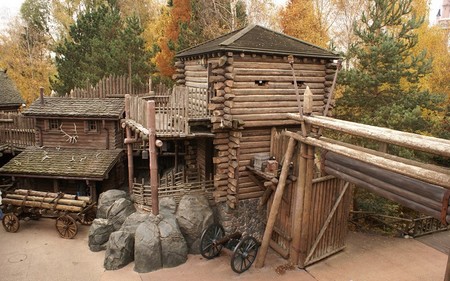
The Tantagruhk became the proud symbol of Koldrogan, and the Golboren people built a strong, vast fortress around the holy site. It became their capital, where all war kings and war queens would hold serious meetings and conduct official business. A second base of operations was set up in the Degahar region to handle immediate concerns in the west.

The At'mavan people, in the fifth great cycle, managed to wrest the Heskegi region from Golboren control, separating the east from the west by a thin line of territory. 

The At'mavi-Koldrogan Shaman's Symposium was founded to allow pacifist shamans to gather and discuss issues pertinent to their profession, to trade medicines, and to allow masters to adopt new apprentices. The event is held annually and is protected by forces on both sides of the conflict. Political discussions are banned for fear of violence.

The councils of the World Senate have begun to turn their eye to the Golboren people, debating on whether or not they will permit an ambassador from Koldrogan to join their ranks.

Where the Story Begins

Antegga Portrait 2012The story will follow a young warrior by the name of Antegga Koldroskaro, who is cast out of his tribe by his mother after the accidental murder of his father, the war chief, during a coming of age duel. With only his cousins and sister to support him, he must learn to survive in the harsh wilds of Koldrogan as he comes to terms with the consequences of his error and learn how life functions outside of home.

 His journey begins meager, with only the clothes on his back and his father's sword, and with three companions at his side, but his heart is not snuffed out by the conditions. Instead, he blossoms, building a following of his own as he sets his sights upon the title of War King of Koldrogan. 

Over the course of his story, the audience will come to learn the Golboren people's culture and lifestyles from within the system itself and see firsthand how the At'mavan people are, in fact, not the only bad guys anymore. The many factions of Koldrogan will be revealed, from the Kamunagi (warriors of the night), to the shamans, the chrut (nomadic silent druids of the deep woods), sorcerers, witches and warlocks, political intrigue, and how the entire war has become nothing but a display of heated racism.

This will be one of the most action-packed, richly detailed series in the entire franchise, and one of the first chain of books to get started chronologically, so I hope that I've cultivated some interest in this story and these characters within you. I hope you look forward to it at least a fraction of how much I do. (I know about a lot of events that you can't possibly know about, so I don't expect the kind of overzealous enthusiasm that I have.)

Anyway, that's all for this summary for the moment. I will run follow-up posts on any further details as  I  feel they are ready to go live. 

Until next time,
Matthew D. Hammond
~2014~


Friday, August 1, 2014

The Three Eras of Novan-Gan

    In the realm of Drumlore, the planet, Novan-Gan, has seen three great eras of civilization. Two of them had risen to an elite, world dominating status before crises struck them and they were (almost) entirely annihilated. The book series and short stories will all take place in the third of these eras. Here, let me break it down:

The Third Era

     The third wave of civilizations to grow on the face of Novan-Gan. Civilization has not reached its peak; technology is comparable in most places to the late BCs of Earth and countries still haven't expanded to their maximum capacities. There are still many places on the world map that have not been explored and documented, and arts of philosophy and logic have just been embraced by the masses. It's an era full of mystery, growth, progression, and enlightenment.

The Second Era


Throughout the series, many ruins and relics are encountered from ancient civilizations. These are the ruins and relics of the second era. At the peak of this era, there were three countries: Dega, Cal Dhima, and Jimhalan. These three massive countries had amazing architectural sophistication, and where their cities were at their densest, sprawling ruins still remain after tens of thousands of  years.


    Little is known about the people who once inhabited these vast cities or what lead to their demise. There are reoccurring plazas, each of a similar design, scattered throughout the ruins of each civilization. They emit strange particles of light that drift through the air and are mostly visible at night. People refer to them as wisps and tell tales of people falling ill after encountering them. The wisps have been linked by scholars and philosophers to magic and to alchemy, but none of their theories have been proven. Shamans are warned away from entering the spirit realm in these ruins or around these plazas, as oral tradition says that most who do never return to the world of the living. Shamans occasionally relate the wisps to demons because of this.

The First Era

     ...an era that the people of the second and third eras did not/do not even know existed. This era existed hundreds of thousands of years before mankind and trollkind began crafting tools and building shacks. ...A time when a race that is now lost to history ruled the world as one collective entity. They were called the Noth, and, although every trace of the people and their cities are gone, their strange creations still roam the world. That is all that I will say for certain. The details? You'll have to wait on the books for that. 

That wraps up today's official lore tidbit. As always, feedback and questions make my day, so feel free to comment me here or on facebook with anything you want to say! Live well, and read more!